Quick Answer
The best base for a log cabin depends on its size, weight, ground conditions and intended use. A properly constructed concrete slab can provide a stable foundation for larger cabins, while well-supported paving slabs may suit smaller garden buildings. Ground screws can be an alternative for certain sloping or uneven sites. Before choosing, check the cabin’s foundation requirements, drainage conditions and installation specifications to ensure the base is level, stable and suitable for the structure.
Introduction
Planning a log cabin involves more than choosing its size, style and location. The foundation beneath the building plays a vital role in its stability, durability and long-term performance. A poorly prepared base can lead to uneven floors, misaligned doors and windows, and problems caused by trapped moisture.
For homeowners across Sussex, Surrey and the South East, garden conditions can vary significantly. You might have a flat lawn with firm soil, a sloping garden, heavy clay ground or an existing patio that appears suitable for a new cabin.
Three foundation options worth considering are concrete slabs, paving slabs and ground screws. Each has its own advantages, limitations and installation requirements. Understanding how they differ can help you make an informed decision, prepare your garden properly and avoid unnecessary installation complications.
Whether you are planning a compact 3m x 3m log cabin or a larger garden building, choosing the right foundation should be an early part of your project planning.
1. Concrete Slab Bases: When Is Concrete the Right Choice?
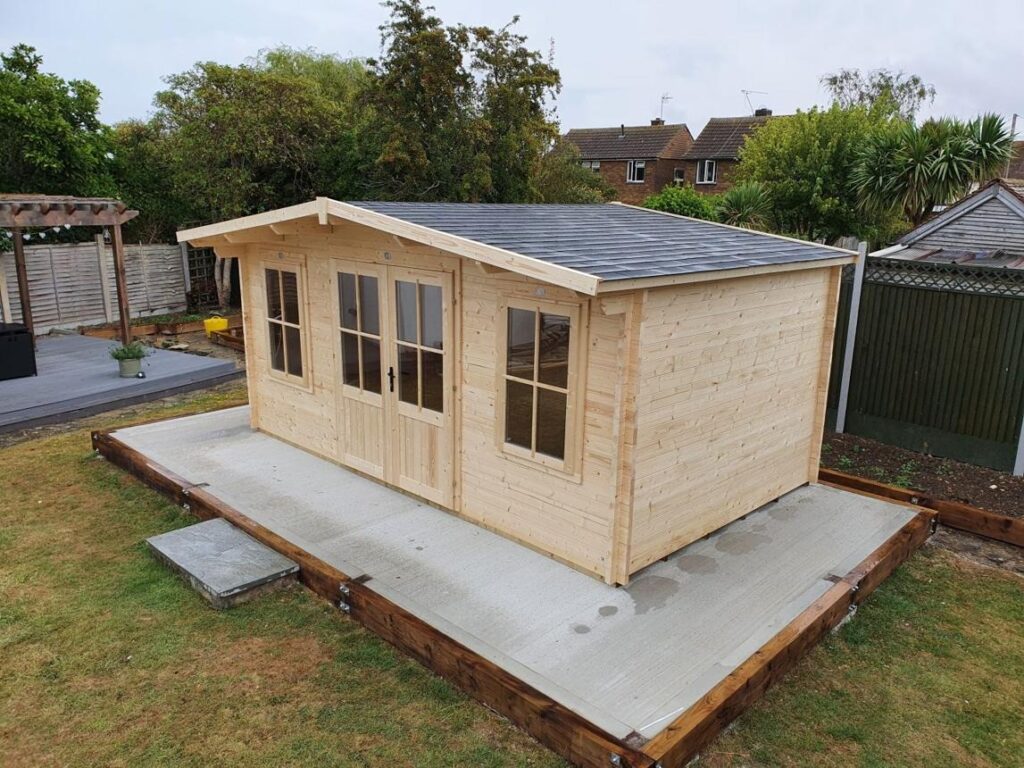
A concrete slab is a popular foundation option for log cabins because it can provide a firm, continuous supporting surface when designed and installed correctly. It is often considered for larger garden buildings, including workshops, garden offices and cabins intended for regular use.
Advantages of a concrete log cabin base
- Consistent support: A correctly constructed slab can distribute the cabin’s load across the foundation.
- Stable surface: Concrete can provide a level platform when the ground has been properly prepared.
- Suitable for larger buildings: It may be appropriate for substantial cabins, depending on their structural requirements.
- Long-term durability: A correctly specified and constructed slab can provide a durable foundation.
For example, if you are planning a dedicated workspace, browse the range of garden office log cabins to compare building options and consider the foundation requirements for your chosen design.
What should you consider before choosing concrete?
Concrete requires careful preparation, which may include excavation, a compacted sub-base, formwork and sufficient curing time before installation. The required slab thickness and reinforcement depend on the cabin’s weight, soil conditions and site requirements. There is no single specification that suits every garden building.
Drainage is another important consideration. Rainwater should not collect around the foundation or timber floor bearers. A suitable damp-proof membrane (DPM), installed in the correct position for the foundation design, can help protect timber components from moisture.
Before committing to a concrete base, factor in groundwork costs, access for concrete deliveries and the time needed before the installation team can begin assembling the cabin.
Best suited to: Homeowners planning a larger cabin who have suitable ground conditions and are prepared for more involved groundwork.
2. Paving Slab Bases: Are They Suitable for a Garden Log Cabin?
Paving slabs can provide a practical alternative to a poured concrete foundation, particularly for smaller garden buildings. They may also be worth considering if you already have a suitable paved area in your garden.
However, the performance of a paving slab base depends heavily on what lies beneath it. Simply placing slabs on soil or loose sand is unlikely to provide the stable support a log cabin needs over time.
Advantages of paving slab foundations
- Paving can be less involved to install than a full concrete slab.
- Individual slabs are easier to handle than a continuous concrete foundation.
- A properly prepared base can provide stable support for a suitable cabin.
- Existing paving may reduce additional groundwork if its construction and condition are appropriate.
A smaller building, such as a 3m x 3m log cabin , may be a candidate for a properly prepared paving base, provided the cabin’s specifications allow it.
What can go wrong with paving bases?
If the sub-base is poorly compacted or the slabs are not level, individual sections may sink or shift over time. Even small changes in level can affect the cabin’s alignment, potentially causing problems with doors, windows and floor bearers.
An existing patio should not automatically be considered suitable. Its foundation, condition, dimensions and ability to support the proposed building should be checked before installation.
Best suited to: Smaller cabins or garden buildings where the paving system can be properly supported, levelled and confirmed as suitable for the intended load.
3. Ground Screw Foundations: Can You Avoid Major Excavation?
Ground screws are steel foundation components installed into the ground to support a suitable structural frame or foundation system. They can offer an alternative to extensive excavation and concrete work, depending on the site and cabin design.
Ground screws are sometimes considered for sloping gardens, uneven plots or locations where conventional groundwork could be disruptive. However, their suitability depends on more than the garden’s surface appearance.
Why consider ground screws?
- Reduced excavation: In suitable ground, ground screws may reduce the need for extensive digging.
- Potentially quicker installation: Specialist installation may take less time than constructing and curing a concrete slab.
- Adaptability to certain slopes: A designed support system can accommodate some changes in ground level.
- Less garden disruption: Installation may disturb less of the surrounding garden than conventional foundations.
Are ground screws suitable for every log cabin?
No. Ground screws must be selected and positioned according to the cabin’s dimensions, weight, structural layout and ground conditions.
Soil composition, buried obstructions, load capacity and the required support points all influence whether this type of foundation is appropriate. The cabin’s floor bearers also need correctly positioned support in accordance with the building design.
If your garden has unusual dimensions or level changes, exploring bespoke log cabin designs may help you consider a building layout that works with your site. The foundation system must still be confirmed as suitable for the final design.
Best suited to: Projects where a professionally assessed ground screw system is compatible with the cabin and the site’s ground conditions.
4. Concrete, Paving or Ground Screws: How Do They Compare?
Each foundation type has different preparation needs, costs and suitability considerations. The comparison below can help you narrow down your options before arranging groundwork.
| Consideration | Concrete slab | Paving slabs | Ground screws |
| Ground preparation | Excavation and sub-base | Stable, compacted sub-base | Ground assessment and suitable installation points |
| Installation time | Includes curing time | Depends on preparation and laying | May be quicker in suitable ground |
| Larger cabins | Often suitable when correctly designed | Depends on slab and sub-base design | Depends on load capacity and structural design |
| Uneven gardens | Usually needs levelling or designed groundwork | Requires a stable, level supporting surface | May accommodate level changes with a designed frame |
| Main consideration | Drainage and concrete quality | Risk of movement if poorly supported | Soil suitability and correct load-bearing design |
There is no universally cheapest or best option. The total cost depends on the cabin, ground conditions, access, materials and labour involved.
5. How to Choose the Right Log Cabin Base for Your Garden
Before selecting a foundation, assess these five factors to help ensure the base is suitable for your project.
Cabin size and intended use
A compact storage cabin and a larger garden office place different demands on their foundations. Check the cabin’s dimensions, weight and specified support requirements before choosing a base.
If you are comparing log cabin kits for DIY or professional installation , confirm the foundation requirements for the particular model rather than assuming all cabins use the same base.
Soil conditions and drainage
Clay soil, made-up ground and areas that remain waterlogged may need additional assessment. Poor drainage can affect foundation stability and increase moisture exposure around timber components.
Garden slope
If your garden is uneven, compare the practicality of levelling the ground with a suitable raised foundation system. A sloping plot does not automatically mean ground screws are the right choice.
Access for groundwork and installation
Consider whether machinery, concrete deliveries or foundation installers can reach the cabin location. Restricted access may influence the foundation method, overall cost and installation schedule.
Installation requirements
If you are arranging professional installation, confirm the base specifications before groundwork begins. The foundation must meet the cabin’s requirements for dimensions, level and support.
Review the log cabin installation guide before preparing your site. Coordinating the groundwork with the installation team can help reduce the risk of delays or an aborted installation visit.
6. Common Log Cabin Base Mistakes to Avoid
Even a suitable foundation can cause problems if it is poorly prepared. Avoid these common mistakes when planning your cabin installation:
- Assuming an existing patio is strong enough: Check its construction, condition and sub-base rather than judging by appearance alone.
- Ignoring small level differences: An uneven foundation can affect the cabin’s alignment, even if the difference appears minor.
- Overlooking moisture protection: Timber components need suitable protection from ground moisture and standing water.
- Making the base too small: The foundation must support the building as specified, including any additional posts or veranda supports.
- Choosing a foundation before checking the cabin specification: Confirm the proposed base is compatible with the building and installation requirements.
For more practical preparation advice, visit the garden cabin FAQs before arranging your installation.
Frequently Asked Questions About Log Cabin Bases
1. What is the best base for a log cabin?
The best base depends on the cabin’s size, weight, ground conditions and structural requirements. Concrete slabs, properly supported paving and designed ground screw systems can all be suitable in the right circumstances. The foundation should be stable, level and compatible with the cabin.
2. Can you put a log cabin directly onto paving slabs?
Yes, if the paving slabs are properly supported, level, stable and capable of supporting the cabin. Slabs laid directly on soil or an unstable surface may shift over time, potentially affecting the building’s alignment.
3. Do log cabins need a concrete base?
No. A concrete base is not essential for every log cabin. Depending on the building specification and site conditions, suitable paving, a timber platform or another approved foundation system may be used.
4. Can you install a log cabin on uneven ground?
A log cabin needs a suitable, level and stable supporting structure. Uneven ground may require levelling or a purpose-designed raised foundation. The right approach depends on the slope, soil conditions and cabin design.
5. Do you need a damp-proof membrane under a log cabin?
A damp-proof membrane is an important consideration, particularly where timber bearers sit above concrete or another moisture-prone surface. It should be installed in the correct position for the foundation system to help reduce moisture transfer to timber components.
Conclusion: Prepare the Right Foundation Before Your Log Cabin Arrives
Choosing between a concrete slab, paving slabs and ground screws comes down to more than price or installation speed. The right foundation must support your cabin, suit your garden’s ground conditions and meet the building’s installation requirements.
Concrete may be suitable for a larger cabin, while properly prepared paving can work for smaller buildings. Ground screws may offer a practical alternative on certain sites, provided the ground and structural design are suitable.
Before arranging groundwork, check your cabin’s specifications, assess access and drainage, and confirm the base requirements with your supplier. Getting these details right before delivery can help prevent avoidable delays and create a reliable foundation for years of use.
Planning a garden building in Sussex, Surrey or elsewhere in the South East? Browse the UK Log Cabins garden building range to compare available options. You can also contact the UK Log Cabins team to discuss your project, site preparation and installation requirements before your cabin arrives.