Quick Answer
A log cabin roof usually leaks because of damaged roofing felt or shingles, loose roof coverings, poorly sealed joints, insufficient roof pitch, blocked gutters or deteriorated flashing. To fix the problem, identify where water enters, repair or replace the damaged material, check the roof’s drainage and inspect the surrounding timber for moisture damage. Regular maintenance and suitable waterproof roofing materials can help prevent recurring leaks.
Introduction
A log cabin provides valuable extra space for a garden office, workshop, summerhouse or relaxing retreat. However, exposure to British weather means its roof must withstand persistent rain, strong winds, temperature changes and seasonal moisture.
Even a small defect in the roof covering can allow water to reach the timber structure, potentially leading to damp patches, mould, timber decay and costly repairs. The challenge is that the visible leak inside the cabin may not be directly beneath the point where rain enters.
Understanding the causes of a leaking log cabin roof makes it easier to choose the right repair and protect the building for years to come. Whether your cabin has traditional felt, felt shingles or EPDM rubber roofing, the correct solution depends on the roof’s construction, condition and the source of the water ingress.
1. Damaged or Worn Roofing Felt
Roofing felt is commonly used on garden buildings, but it can deteriorate over time. Sunlight, temperature fluctuations and repeated exposure to rain can cause the material to crack, split or become brittle. Strong winds may also lift its edges or tear it away from the roof.
Once the waterproof layer is compromised, rainwater can penetrate the roof boards and reach the cabin’s interior. Older felt coverings are particularly vulnerable when they have not been inspected or maintained regularly.
How to fix it: Inspect the felt for tears, loose edges and visible gaps. Small areas of damage may be repairable with a compatible roofing repair product, provided the surrounding material remains sound. If the felt is brittle or damaged across a large area, replacing the covering is generally a more reliable solution.
For exposed sites, consider whether a more durable roofing system would be suitable. UK Log Cabins explains the advantages of different materials in its guide to maintenance-free garden buildings.
2. Loose or Lifted Felt Shingles
Felt shingles provide a protective, overlapping covering on pitched roofs. However, individual shingles can lift, crack or detach during strong winds, especially if their bonding strips have not properly adhered.
Incorrect installation can also leave gaps between rows or expose nail fixings to rainwater. Water may then travel beneath the shingles and enter the roof structure.
How to fix it: Check for missing shingles, lifted edges and incorrectly aligned rows. Replace damaged sections and refix loose shingles according to the manufacturer’s instructions. Avoid using a naked flame to soften roofing materials, as this creates a fire risk.
Actual performance depends on installation, exposure and maintenance. Read the garden cabin roofing FAQs for further installation guidance.
3. Incorrect Roof Pitch or Poor Installation
The roof’s slope plays an important role in directing rainwater away from the building. If the pitch is too shallow for the chosen roofing material, water may drain slowly or enter through vulnerable joints.
Poorly fitted underlay, inadequate overlaps and incorrectly positioned fixings can create similar problems. These defects may remain unnoticed until prolonged rainfall exposes them.
How to fix it: Check the roof design and the installation requirements for the covering. For example, UK Log Cabins states that its felt shingles require a minimum roof pitch of 12 degrees to be watertight. It also strongly recommends underfelt for pitches below 15 degrees.
These figures relate to the company’s guidance for its roofing system; other products may have different requirements. If the roof pitch is unsuitable, adding sealant alone will not resolve the underlying problem. A roofing specialist can assess whether the installation needs correcting or the covering needs changing.
4. Failed Roof Joints, Flashing and Edge Trims
Roof ridges, valleys, corners and junctions can become weak points when their seals deteriorate. Where a cabin has roof extensions or adjoining sections, water may enter through poorly protected connections.
On EPDM rubber roofs, the perimeter trims are also important. If timber edge strips become rotten or fixings loosen, water can reach the underlying roof structure.
How to fix it: Examine the ridge, edges, joints and any flashing around adjoining structures. Replace deteriorated seals and damaged trims with components compatible with the roofing system. Where the roof covering has split or pulled away from a junction, the damaged section may need professional repair.
If the roof is ageing, it may be worth considering a broader upgrade rather than repeatedly patching individual joints. UK Log Cabins provides information about log cabin roof repairs and improvements, including alternative roofing materials.
5. Blocked Gutters and Poor Water Drainage
Not every damp patch originates from a hole in the roof. Blocked gutters, overflowing downpipes and inadequate drainage can allow water to collect around roof edges or run down the cabin walls.
Over time, persistent moisture can damage fascia boards, external timber and the lower wall logs. Water splashing back from the ground can also contribute to timber deterioration.
How to fix it: Clear leaves and debris from gutters, check that downpipes discharge correctly and ensure rainwater flows away from the building. Repair leaking gutter joints and replace damaged components where necessary.
Adding suitable guttering can help protect the cabin’s timber by directing water away from its walls and base. For wider maintenance advice, see the log cabin maintenance service.
6. Timber Movement, Roof Settlement and Structural Damage
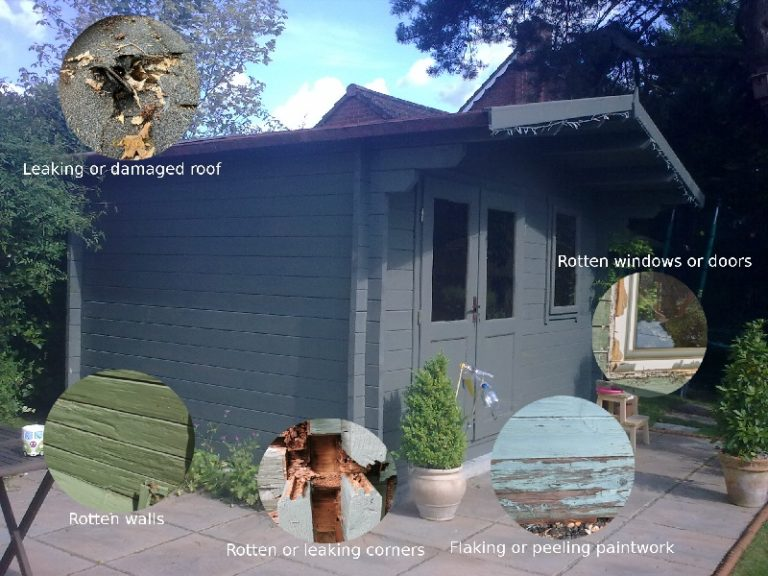
Timber naturally responds to changes in temperature and humidity. Over time, a log cabin may settle, and its components can move slightly. If this movement affects roof alignment, fixings or junctions, gaps may develop and allow water to enter.
Previous repairs, structural alterations or decayed roof boards can make the situation more complicated. A leak may therefore indicate a structural issue rather than simply a damaged waterproof layer.
How to fix it: Look for uneven rooflines, displaced components, soft timber, staining and persistent dampness. Avoid tightening or altering structural fixings without understanding how the cabin is designed to move.
Where rot or structural distortion is suspected, arrange a professional inspection. UK Log Cabins offers a log cabin inspection service to assess the building’s condition and identify recommended repairs.
How Can You Repair a Leaking Log Cabin Roof Without Replacing It?
A full roof replacement is not always necessary. If the underlying roof boards and structure remain sound, a targeted repair may be sufficient.
Follow these steps to approach the problem safely:
- Locate the source: Look for water stains, damp patches and visible defects inside the cabin. Remember that water can travel along roof boards before appearing indoors.
- Inspect the covering: From a safe position on the ground, check for torn felt, missing shingles, loose edges and damaged trims.
- Assess the damage: Determine whether the problem is confined to one area or affects a substantial part of the roof.
- Repair compatible materials: Patch minor damage where appropriate, or replace the affected shingles, felt or trim according to the manufacturer’s guidance.
- Check the surrounding structure: Inspect accessible timber for softness, discolouration or signs of decay. Damaged roof boards may need replacing before a new covering is fitted.
- Monitor the repair: Once conditions are suitable, check for further signs of water ingress after rainfall.
Avoid climbing onto a wet, fragile or damaged roof. Timber structures can be slippery, and weakened roof boards may not support a person’s weight. If the source is unclear or the damage is extensive, professional assessment is the safer option.
How Much Does It Cost to Repair a Leaking Log Cabin Roof?
The cost depends on the roofing material, the size of the affected area, access requirements and whether the underlying timber has deteriorated.
| Type of repair | What affects the cost? |
| Minor patch repair | Size of the damaged area and materials required |
| Shingle or felt replacement | Extent of damage and replacement covering |
| EPDM roof repair | Condition of the membrane, joints and edge trims |
| Roof board replacement | Amount of rotten or damaged timber |
| Complete roof replacement | Roof dimensions, covering choice, labour and structural work |
A small, localised repair will generally require less work than replacing the entire roof. However, repeated patching may become less economical when the existing covering is extensively worn.
There is no reliable single price for every leaking log cabin. Request a quote based on the building’s dimensions, roof type, photographs and the extent of the damage. The UK Log Cabins repair and upgrade service describes options ranging from localised repairs to complete roof replacement.
How to Prevent Future Roof Leaks
Routine maintenance can help identify minor faults before they cause more serious damage.
- Inspect the roof regularly: Check for loose shingles, damaged felt and deteriorating edges, particularly after storms.
- Keep gutters clear: Remove debris and ensure rainwater drains away from the cabin.
- Check the timber: Look for soft patches, staining and persistent dampness around roof edges and walls.
- Maintain protective finishes: Follow the manufacturer’s guidance for treating exposed timber.
- Address defects promptly: Replace damaged roofing components before water reaches the roof boards.
- Choose suitable materials: Match the covering to the roof pitch, building design and local exposure.
No roofing system is entirely maintenance-free. Regular checks and timely repairs can extend its useful life and reduce the likelihood of expensive structural work.
Conclusion
A leaking log cabin roof can result from damaged felt, lifted shingles, poorly sealed joints, drainage problems or movement within the timber structure. Identifying the underlying cause is essential to choosing a repair that lasts. While minor damage may be fixed without replacing the entire roof, extensive deterioration or recurring leaks may require professional attention.
If your cabin has a persistent leak or you are unsure which repair is needed, contact UK Log Cabins today for advice on suitable repair and roofing options. Call 01403 888 222 or email sales@hortonsgroup.com.
Frequently Asked Questions
1. How do you fix a leaking roof without replacing it?
You can often fix a leaking roof by replacing damaged felt or shingles, sealing compatible roof joints, repairing loose edge trims and clearing blocked gutters. First, identify the source of the leak and check whether the roof boards remain sound. If the damage is extensive or the timber has started to rot, a larger repair may be necessary.
2. How much would it cost to repair a leaking roof?
The cost depends on the roof’s size, covering material, accessibility and extent of the damage. A small patch repair will generally cost less than replacing multiple shingles, damaged roof boards or the entire covering. Obtain a tailored quotation after the affected area and any underlying structural damage have been assessed.
3. Why does my roof leak sometimes and not others?
A roof may leak only during heavy rain, strong winds or particular wind directions. These conditions can force water beneath loose shingles, through small gaps or around roof joints. Temperature changes can also affect roofing materials and seals. If the leak appears intermittently, note the weather conditions and where water becomes visible to help identify the source.
4. When should you worry about a roof leak?
Take a leak seriously if water is reaching electrical fittings, the ceiling is sagging, timber feels soft, mould is spreading or water continues entering after temporary repairs. Active water ingress near electrics requires immediate caution. Arrange a professional inspection promptly if you suspect structural damage or cannot identify the source safely.
5. Can water enter through the ends of the timber logs or cabin corners?
Yes. Water can enter through gaps around log joints and corners if the seals, roof overhangs or protective details are inadequate. However, moisture near a corner does not automatically mean the logs themselves are the source; water may have travelled from the roof. Inspect the roof edges and joints first, and seek expert advice if the timber is persistently damp or deteriorating.