Quick Answer
A well-built and properly maintained log cabin can last for several decades, with many well-cared-for cabins remaining serviceable for more than 20 years. However, there is no single fixed lifespan for every log cabin. The quality of the timber, construction, base, damp protection, drainage, roofing, weather exposure and ongoing maintenance all influence how long it remains in good condition.
For UK homeowners, moisture management is one of the most important factors. Keeping water away from the timber, protecting the base and treating exposed wood regularly can significantly extend the useful life of a cabin.
Introduction
A log cabin can be much more than a temporary garden building. Whether used as a home office, workshop, leisure space, gym or additional living area, a properly designed timber building can provide useful space for many years.
But one of the most common questions people ask before buying is: how long does a log cabin last?
The answer depends less on a particular number of years and more on how the cabin is designed, installed and maintained. Timber is naturally durable when it is properly protected, but prolonged exposure to moisture can lead to deterioration, particularly around the base of the building.
Understanding the factors that affect longevity makes it easier to choose the right specification and look after your cabin properly from the beginning.
How Long Does a Log Cabin Last?
There is no universal lifespan that applies to every log cabin. A well-built cabin that is correctly installed and regularly maintained can provide several decades of useful service.
In practice, the main structure can last significantly longer than individual components such as roofing, windows, doors, floorboards or surface coatings. These elements may require maintenance, refurbishment or replacement at different points during the building’s life.
Experience with older timber buildings also shows why age alone should not determine whether a cabin is still usable. A cabin that is 20 years old and has been kept dry and well maintained may be in better condition than a much newer building that has suffered from persistent damp.
The key question is therefore not simply “How old is the cabin?” but “How well has the cabin been built, protected and maintained?”
What Affects the Lifespan of a Log Cabin?
Several factors work together to determine how long a cabin remains structurally sound.
1. Timber Quality and Construction
The quality of the timber and the way the building is constructed both matter. Properly manufactured components, accurately fitting interlocking logs and a sound structural design help the building withstand normal movement and changing weather conditions.
A well-designed log cabin kit should also be suitable for the intended use and site rather than simply being selected on appearance or price.
Good construction provides the foundation for longevity, but even high-quality timber requires appropriate protection once exposed to the UK climate.
2. A Properly Prepared Base
The base is one of the most important parts of a long-lasting cabin.
A base needs to be stable, level and appropriately prepared for the building. If the structure is not adequately supported, problems can develop with floors, doors, windows and the alignment of the cabin.
Moisture is an even bigger concern. Timber that remains exposed to damp conditions for prolonged periods is more vulnerable to decay.
A damp-proof membrane can help prevent moisture from the ground reaching the timber floor structure. The site also needs sufficient drainage so rainwater does not remain around the building.
3. Drainage and Guttering
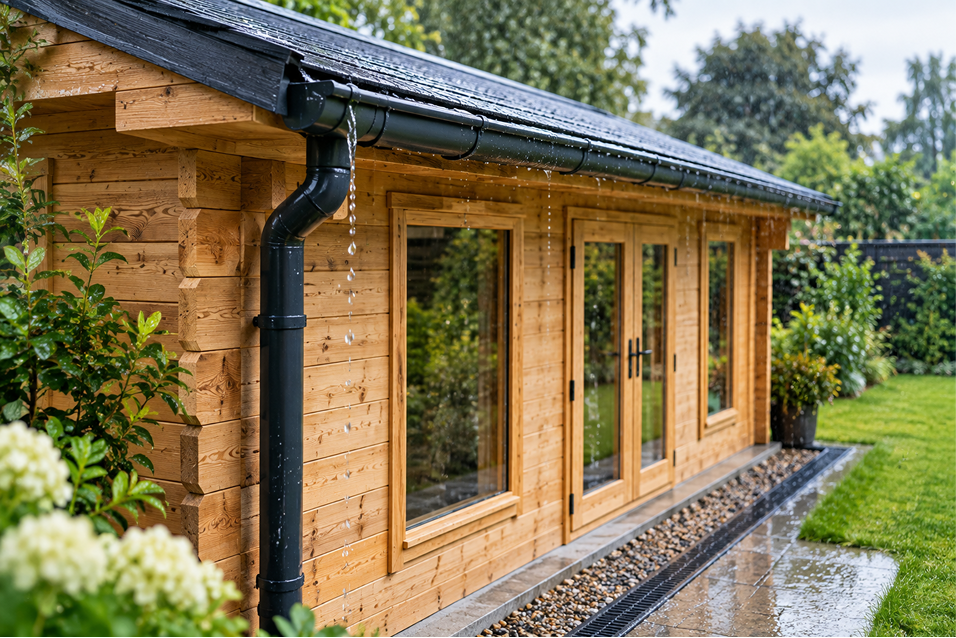
Rainwater needs somewhere to go.
Without effective drainage, water running from the roof can splash against the lower wall logs. Over time, repeated exposure to moisture can contribute to timber deterioration, particularly around the bottom of the building.
Installing and maintaining guttering for a garden cabin helps direct rainwater away from the walls and surrounding ground.
After periods of heavy rain, it is worth checking whether water is collecting around the base. Persistent standing water is a warning sign that drainage should be addressed rather than ignored.
4. Timber Treatment
Timber treatment is essential for protecting a cabin from the effects of weathering and helping prevent deterioration.
Pressure treatment and surface coatings perform different functions. Pressure-treated timber can provide protection against fungal and insect attack, while a suitable exterior paint or stain helps protect the timber from moisture, weathering and UV exposure.
The treatment system and manufacturer’s instructions should always be followed. A cabin may need its external finish refreshed periodically, with the exact interval depending on the product used and the level of exposure.
A high-quality waterproofing treatment is particularly important after construction unless the building has already received an appropriate factory finish.
5. Roofing
The roof protects the rest of the cabin, so its condition has a direct impact on the building’s longevity.
A damaged or deteriorating roof can allow water into the structure, potentially affecting the roof timbers, walls and interior.
Roofing materials have different expected service lives. For example, the roofing options available for cabins can include felt shingles and EPDM rubber roofing, with each offering different characteristics and maintenance requirements.
Regularly remove leaves and debris, inspect vulnerable areas and deal with damage promptly rather than waiting for a leak to become obvious.
6. Location and Exposure
Where a cabin is positioned can also influence how quickly it weathers.
A building surrounded by dense vegetation may receive less airflow, while overhanging trees can contribute leaves and debris to the roof and gutters. Areas that remain shaded and damp for long periods can also make moisture management more difficult.
Good airflow around the building, sensible landscaping and adequate drainage can all help the timber dry more effectively after wet weather.
How to Maintain a Log Cabin and Extend Its Life
The best way to protect a cabin is to deal with small issues before they become major repairs.
A practical maintenance routine should include:
- Inspect the timber regularly: Look for cracking, soft areas, peeling finishes or visible signs of deterioration.
- Check the lower logs: The timber closest to the ground is particularly important because it can be exposed to splashback and persistent moisture.
- Keep the base clear: Remove leaves, soil, weeds and other debris that could retain moisture against the building.
- Maintain the roof: Check for damaged, loose or ageing roofing materials and keep gutters clear.
- Refresh exterior treatment: Repaint or restain the timber when the existing finish starts to deteriorate.
- Check doors and windows: Make sure they open, close and seal correctly, and maintain hinges and moving parts where required.
- Inspect after severe weather: Strong winds and prolonged rainfall can reveal problems that may otherwise go unnoticed.
These checks do not have to be complicated. A regular inspection can identify a small area of deterioration before it develops into a much more expensive structural problem.
What Are the Signs a Log Cabin Needs Repair?
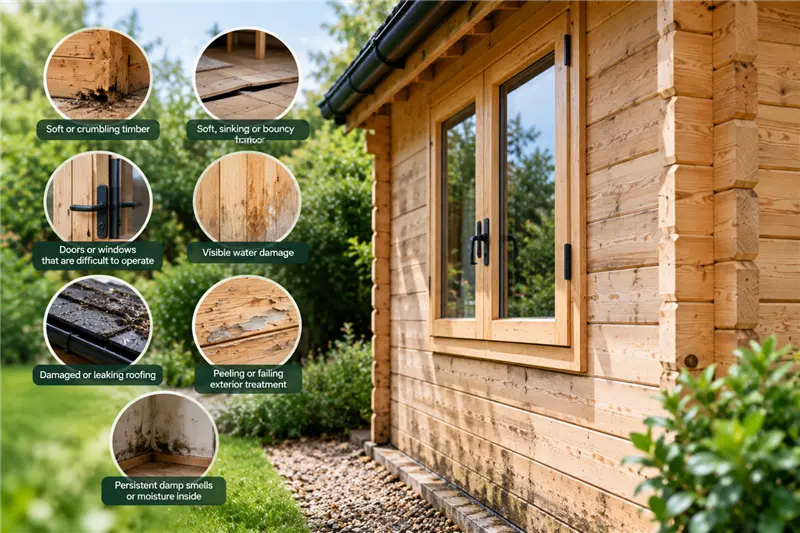
A cabin does not necessarily need replacing simply because it is showing signs of age.
Some common warning signs include:
- soft or crumbling timber, particularly around the bottom of the walls
- a soft, sinking or bouncy floor
- doors or windows that suddenly become difficult to operate
- visible water damage
- damaged or leaking roofing
- peeling or failing exterior treatment
- persistent damp smells or moisture inside the cabin
Some of these symptoms can have several possible causes. For example, a soft floor may indicate deterioration in the floorboards, but it can also point to problems with the floor bearers or moisture underneath the building.
Professional assessment can therefore be useful when the cause is unclear. Specialist log cabin repairs and restoration can sometimes extend the useful life of an existing building without requiring complete replacement.
Can a 20-Year-Old Log Cabin Still Be Worth Repairing?
Yes. Age alone does not mean a log cabin has reached the end of its useful life.
If the main structure remains sound and the damage is localised, repairing affected timber, flooring, roofing or other components may be a practical way to extend the building’s lifespan.
The right decision depends on the condition of the entire structure. A professional inspection can help identify which components need attention and whether repair or replacement is more appropriate.
This is particularly useful when buying an older cabin, assessing an existing building or investigating a suspected moisture problem.
Are Log Cabins Suitable for Year-Round Use?
A standard single-skin cabin and a fully insulated garden building are not the same thing.
If you want to use a cabin throughout the year, particularly as a home office or regularly occupied space, insulation, glazing, ventilation and heating should be considered as part of the overall specification.
For example, insulated garden offices are designed with year-round comfort in mind and can provide a more suitable environment for working during colder UK months.
The important point is that longevity and year-round comfort are related to the building specification, but they are not the same consideration. A cabin can be structurally durable without necessarily being designed for permanent habitation.
How to Get the Longest Possible Life from a Log Cabin
There is no single maintenance task that guarantees a cabin will last for decades. Longevity comes from several measures working together.
When planning a new cabin, consider:
- Choose an appropriate building specification for how you intend to use it.
- Prepare a suitable, level base before installation.
- Protect against rising damp with appropriate damp-proofing.
- Provide effective drainage around the building.
- Use suitable exterior timber treatment and maintain it over time.
- Protect the walls from roof runoff with suitable guttering.
- Choose durable roofing appropriate to the building and its exposure.
- Keep vegetation and debris away from the structure.
- Inspect the cabin regularly, especially after periods of heavy rain or strong winds.
- Repair small problems early rather than allowing moisture or rot to spread.
These measures are particularly important in the UK’s changeable and often wet climate.
Final Thoughts
So, how long do log cabins last? There is no fixed answer, but a well-built, properly protected and regularly maintained cabin can provide many decades of useful service.
The most important factors are not simply the age or thickness of the timber. Base preparation, damp-proofing, drainage, roofing, timber treatment, ventilation, site conditions and regular maintenance all contribute to long-term performance.
Most importantly, don’t assume that an older cabin automatically needs replacing. If the main structure is sound, many problems can be repaired and the building’s useful life extended.
With the right specification and consistent care, a log cabin can remain a valuable and practical part of your garden for many years.
Frequently Asked Questions
1. How long does a log cabin last on average?
A well-built and properly maintained log cabin can last for several decades. Many cabins remain serviceable beyond 20 years, but actual lifespan depends on construction quality, moisture protection, site conditions, roofing, timber treatment and ongoing maintenance.
2. What shortens the lifespan of a log cabin?
Persistent moisture is one of the biggest risks. Poor drainage, inadequate damp-proofing, roof leaks, water splashing against lower wall logs and neglected timber treatment can all contribute to premature deterioration.
3. Do log cabins need regular maintenance?
Yes. Timber garden buildings are not completely maintenance-free. Regular inspections, exterior treatment, roof and gutter maintenance, vegetation clearance and prompt repairs can all help extend the cabin’s useful life.
4. Is a 20-year-old log cabin worth repairing?
It can be. A 20-year-old cabin should be assessed based on its actual condition rather than its age alone. Localised problems such as damaged floorboards, lower wall sections or roofing may be repairable, while extensive structural deterioration may require more substantial work.
5. Do log cabins last in the UK’s wet climate?
Yes, provided moisture is properly managed. Effective drainage, damp-proofing, suitable timber treatment, a sound roof and regular maintenance are particularly important for protecting a cabin from the UK’s wet and changeable weather.
Planning a Log Cabin? Speak to Our Team
Whether you’re choosing a new log cabin, looking for advice on the right specification or need help with an existing timber building, our team is here to help.
Get in touch today to discuss your requirements and find the right solution for your space.
Call us: 01403 888222
Email: sales@hortonsgroup.com
Or contact us online and a member of our team will be happy to assist.